Home Battery Storage Guide 2026
Who This Is For
Homeowners comparing quotes, running payback math, or deciding whether solar belongs in a larger home energy plan.
You’ll Leave With
- What Is a Home Battery and How Does It Work?
- The Best Home Batteries in 2026
- Tesla Powerwall 3
- Enphase IQ Battery 5P
Best Next Step
Keep moving instead of starting over
When you finish this article, use the next guide below to compare options or validate your plan.
See what to ask installers→Home Battery Storage Guide 2026
Home battery storage has gone from niche technology to mainstream home upgrade in just a few years. Whether you already have solar panels on your roof or you are looking at a complete energy overhaul, adding a battery to your home can provide backup power during outages, slash your electricity bills, and give you real independence from an increasingly unpredictable grid.
But batteries are not cheap, and the financial picture shifted significantly in 2026 after the federal residential clean energy tax credit expired. So is a home battery still worth the investment? If you are still deciding whether a battery makes sense for your home, start with our guide on how to buy a home battery, which walks through the full decision process from rate structures and incentives to sizing and installation. This guide focuses on the products themselves: how home batteries work, which ones to buy, what they cost, and whether the numbers add up for your household.
What Is a Home Battery and How Does It Work?
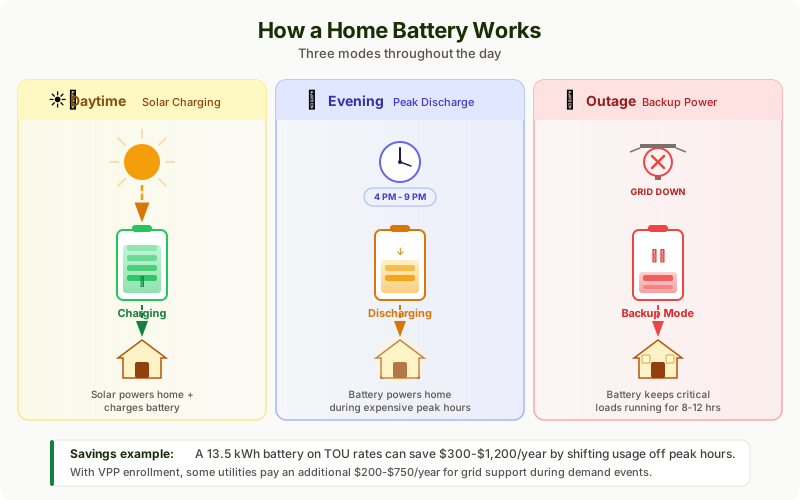
A home battery is a rechargeable energy storage system installed in your house, typically in a garage, basement, or mounted on an exterior wall. It stores electricity that you can use later, either from your solar panels or from the grid during off-peak hours when electricity is cheapest.
The core concept is simple. During the day, your solar panels may produce more electricity than your home needs. Without a battery, that excess energy gets sent back to the grid. With a battery, you store it and use it in the evening when your panels stop producing and electricity rates tend to be highest.
Home batteries also function as backup power systems. When the grid goes down, a battery can keep your essential appliances running, from your refrigerator and lights to your internet router and medical equipment. Some larger systems can power an entire home through an outage, including air conditioning and electric cooking.
Modern home batteries use lithium-ion chemistry, specifically lithium iron phosphate (LiFePO4), which offers excellent cycle life, thermal stability, and safety. A typical system includes the battery cells, a built-in or separate inverter to convert stored DC power to AC for your home, and a management system that handles charging, discharging, and grid interaction automatically.
If you already have solar panels, check out our guide on the real cost of installing solar panels at home for background on how solar and storage work together financially.
The Best Home Batteries in 2026
The residential battery market has matured considerably, with several strong options across different price points and use cases. Here is how the top contenders compare.
Tesla Powerwall 3
The Powerwall 3 remains one of the most popular home batteries on the market, and for good reason. It packs 13.5 kWh of usable storage with an impressive 11.5 kW of continuous power output, meaning it can handle heavy loads like air conditioning and electric cooking simultaneously. The built-in hybrid inverter supports up to 20 kW of solar input across six MPPTs, which simplifies installation if you are adding solar and storage at the same time.
The warranty covers 10 years with unlimited cycles and guarantees 70 percent capacity retention at the end of the term. Round-trip efficiency sits at 90 percent, and the system supports 100 percent depth of discharge, so you can use every kilowatt-hour of stored energy.
Where the Powerwall 3 falls short is expandability. You can stack multiple units, but each one is a full 13.5 kWh system rather than a modular add-on, which makes scaling up more expensive. Expect to pay around $15,000 to $16,500 fully installed for a single unit.
Enphase IQ Battery 5P
Enphase takes a fundamentally different approach with the IQ Battery 5P. Each unit provides 5 kWh of storage with 3.84 kW of continuous power, and the system is designed to stack. Most homeowners install two to four units for 10 to 20 kWh of total capacity, and you can add more units later as your needs grow.
The standout feature is the warranty: 15 years and 6,000 cycles, the longest coverage in the residential market. Round-trip efficiency matches the Powerwall at 90 percent, and the 98 percent depth of discharge is the highest available. The microinverter-based architecture pairs naturally with Enphase solar systems, making it an obvious choice if you already have Enphase microinverters on your roof.
The trade-off is cost. At approximately $1,510 per kWh installed, Enphase is the most expensive mainstream option. A 10 kWh system runs around $15,100, and a more practical 15 kWh setup will approach $22,500. The per-unit power output is also lower than competitors, so you need more units for heavy backup loads.
FranklinWH aPower 2
FranklinWH has emerged as a serious contender with the aPower 2. At 15 kWh per unit, it offers the most storage per cabinet of any mainstream battery, with 10 kW of continuous power and an impressive 15 kW surge capacity for starting compressors and other motor-driven loads.
The system revolves around the aGate, FranklinWH's home energy management hub that functions as an automatic transfer switch, smart circuit controller, and integration point for solar, grid, battery, and even a backup generator. This makes the aPower 2 particularly appealing for homeowners who want comprehensive whole-home energy management.
The warranty is competitive at 15 years or 60 MWh of throughput per unit. Round-trip efficiency comes in at 89 percent, just slightly below the competition. Installed costs typically range from $16,000 to $20,000 for a single unit, placing it at the premium end of the market but offering more storage per dollar than smaller-capacity competitors.
Generac PWRcell 2
Generac redesigned the PWRcell from the ground up for its second generation, switching from the problematic DC-coupled architecture to AC coupling. The result is a more reliable and compatible system that offers 9 to 18 kWh of storage in a single cabinet with up to 10 kW of continuous power, or 11.5 kW in the MAX variant.
Generac's strength is its dealer network. As a major player in the backup generator market, Generac has thousands of certified installers across the country, making it one of the easiest batteries to get installed quickly. Pricing ranges from $14,000 to $25,000 depending on capacity configuration.
LG RESU Prime
LG's RESU Prime series offers the 10H Prime at 9.6 kWh and the flagship 16H Prime at 16 kWh. The DC-coupled design means high efficiency when paired with a compatible hybrid inverter, and LG's manufacturing quality is well-established from years in the consumer electronics space.
The 16H Prime is particularly attractive at $11,000 to $15,000 installed, making it one of the most affordable options on a per-kWh basis. The warranty covers 10 years, which is standard but notably shorter than the 15-year terms offered by Enphase and FranklinWH.
Quick Comparison Table
| Battery | Capacity | Continuous Power | Warranty | Est. Installed Cost |
|---|---|---|---|---|
| Tesla Powerwall 3 | 13.5 kWh | 11.5 kW | 10 yr / unlimited cycles | $15,000–$16,500 |
| Enphase IQ 5P (x2) | 10 kWh | 7.68 kW | 15 yr / 6,000 cycles | ~$15,100 |
| FranklinWH aPower 2 | 15 kWh | 10 kW | 15 yr / 60 MWh | $16,000–$20,000 |
| Generac PWRcell 2 | 9–18 kWh | 10–11.5 kW | 10 yr | $14,000–$25,000 |
| LG RESU 16H Prime | 16 kWh | Varies by inverter | 10 yr | $11,000–$15,000 |
How Much Does a Home Battery Cost in 2026?
The total installed cost for a home battery system in 2026 ranges from $10,000 to $20,000 for a single unit, depending on the brand, capacity, and complexity of your installation. On a per-kilowatt-hour basis, expect to pay between $700 and $1,300 per kWh installed, with the battery equipment itself running $400 to $850 per kWh before labor and permitting. For a deeper line-by-line walkthrough, see our home battery cost breakdown for 2026.
Here is what a typical cost breakdown looks like:
- Battery equipment: $6,000–$12,000
- Inverter (if not built in): $1,500–$3,000
- Installation labor: $2,000–$4,000
- Electrical panel work: $0–$3,000 (if panel upgrade needed)
- Permitting and inspection: $500–$2,500
- Total: $10,000–$20,000+ for a single battery
The good news is that battery prices continue to drop. According to BloombergNEF and Wood Mackenzie data, lithium battery pack costs are declining 8 to 12 percent year over year, meaning the system you buy in late 2026 will likely cost less than one purchased in early 2026.
The Tax Credit Situation in 2026
Here is the uncomfortable reality: the federal Residential Clean Energy Credit (Section 25D) expired on December 31, 2025. If you bought and installed a battery in 2025, you could claim a 30 percent tax credit on the entire system cost, saving $3,000 to $5,000 on a typical installation. That option is gone for new installations in 2026.
The One Big Beautiful Bill, signed into law on July 4, 2025, accelerated the phaseout of several Inflation Reduction Act provisions. The residential credit was among them.
There is one workaround worth knowing about. If you lease a battery system through a solar installer or enter a Power Purchase Agreement (PPA), the commercial clean energy credit (Section 48E) may still apply, with savings passed through to you in the form of lower monthly payments. This is worth discussing with installers in your area.
State and local incentives also remain available in many markets. California's Self-Generation Incentive Program (SGIP), Massachusetts' ConnectedSolutions, and various utility-run Virtual Power Plant (VPP) programs can offset a meaningful portion of battery costs. For a full rundown of what incentives are left, see our guide on solar incentives and tax credits in 2026.
When Does a Home Battery Make Sense?
Not every homeowner needs a battery, and for some households the math simply does not work out. Here is how to figure out whether a battery belongs in your home.
A Battery Makes Strong Financial Sense If...
You have time-of-use electricity rates. If your utility charges different prices depending on the time of day, a battery can save you real money by storing cheap solar energy and using it during expensive peak hours. The bigger the spread between peak and off-peak rates, the faster your battery pays for itself. In markets where the difference exceeds 15 cents per kWh, batteries can save $9 to $15 per day compared to exporting excess solar at off-peak rates.
Your utility offers weak net metering. In states that have moved away from full retail net metering, your exported solar energy may only earn you 3 to 6 cents per kWh while you pay 15 to 30 cents to buy it back in the evening. A battery bridges that gap by letting you use your own solar power instead of selling it cheap and buying it back at a premium. California's NEM 3.0 is the clearest example: adding a battery to a solar system there can cut the payback period from 12 to 15 years down to 7 to 9 years. For more on how net metering policies affect your savings, see our guide on how net metering works and how to maximize it.
You experience frequent power outages. If you live in a hurricane-prone area, a wildfire zone, or anywhere with aging grid infrastructure, the backup power a battery provides has real value that goes beyond simple economics. The peace of mind of keeping your refrigerator running, your lights on, and your medical equipment powered during a multi-day outage is worth something, even if the payback math takes longer.
You can participate in a Virtual Power Plant program. VPP programs allow your utility to briefly draw on your battery during grid peaks in exchange for monthly payments or bill credits. In active markets like California, Texas, and parts of the Northeast, VPP participation can earn $50 to $150 per month and shorten your payback period by two to three years.
A Battery May Not Make Sense If...
You have full retail net metering. In states where your utility pays you the full retail rate for every kWh you export, the grid effectively acts as a free battery. You earn the same value whether you store your solar energy or send it to the grid, so a battery adds cost without improving your financial return. The only exception is if you also want backup power.
Your electricity rates are low. If you pay less than 10 cents per kWh and there is no significant time-of-use variation, the savings from a battery are minimal. It could take 15 or more years to recoup your investment, which is longer than many battery warranties.
Budget is a primary concern. A battery adds $10,000 to $16,000 to your solar investment, and without the federal tax credit, that is a significant outlay. If you are stretching to afford solar panels alone, it may be better to install solar now and add a battery later when prices continue to drop.
How Long Do Home Batteries Last?
Modern lithium iron phosphate home batteries are designed to last 10 to 15 years, which aligns with most manufacturer warranty periods. However, like all batteries, they degrade over time, gradually losing capacity with each charge and discharge cycle.
Most manufacturers guarantee their batteries will retain 70 to 80 percent of original capacity after 10 years. In practical terms, a 13.5 kWh battery under warranty might hold around 9.5 kWh by the end of its tenth year. You will still have a functional battery; it just will not store quite as much energy as it did when it was new.
Cycle count matters too. LiFePO4 batteries typically support 4,000 to 10,000 cycles depending on the specific chemistry and usage pattern. Since most homes cycle their battery roughly once per day, that translates to 11 to 27 years of cycle life, well beyond the typical warranty period.
The biggest enemy of battery longevity is heat. For every 8 to 10 degrees Celsius above 25 degrees, battery life can decrease by up to 50 percent. If you live in a hot climate, installing your battery in a climate-controlled space like a garage or basement rather than on a sun-baked exterior wall can meaningfully extend its lifespan.
The Installation Process
Installing a home battery is not a weekend DIY project. Here is what to expect from start to finish.
Step 1: Get quotes and choose an installer. Start by getting quotes from at least three certified installers in your area. Look for NABCEP (North American Board of Certified Energy Practitioners) certification and specific experience with the battery brand you are considering. EnergySage can help you compare multiple quotes side by side.
Step 2: Site assessment. Your installer will evaluate your electrical panel, identify the best location for the battery, and determine which circuits you want backed up during an outage. If your electrical panel is older or at capacity, you may need an electrical panel upgrade ($1,500 to $3,000) before the battery can be installed.
Step 3: Permitting. Nearly all battery installations require permits from your local authority. Your installer typically handles this, but it can take one to four weeks depending on your jurisdiction. Permit costs range from $500 to $2,500.
Step 4: Installation day. The physical installation usually takes half a day to a full day with a crew of two or more licensed electricians. They will mount the battery, connect it to your electrical panel (often through a new sub-panel for backed-up loads), install an automatic transfer switch if needed, and wire everything to your solar system.
Step 5: Inspection and interconnection. After installation, a local building inspector will verify the work meets code. Then your installer submits interconnection paperwork to your utility, which can take another two to six weeks to process. Once approved, your system is fully operational.
The entire process from initial quote to operational system typically takes four to eight weeks, though permitting backlogs in some areas can extend this to three months or more.
Pros and Cons at a Glance
Pros:
- Backup power during grid outages
- Lower electricity bills through peak shaving and load shifting
- Greater energy independence from your utility
- VPP participation can generate monthly income
- Battery prices continue to drop year over year
- Pairs naturally with solar to maximize self-consumption
Cons:
- High upfront cost ($10,000–$20,000) with no federal tax credit in 2026
- Payback period of 10 to 15 years in many markets
- Limited lifespan (10–15 years) compared to solar panels (25–30 years)
- May need battery replacement during the life of your solar system
- Panel upgrades and permitting add to total cost
- Not cost-effective in areas with full retail net metering and low outage risk
The Bottom Line
Home battery storage in 2026 is better than it has ever been from a technology standpoint. The batteries are more powerful, more efficient, and more reliable than even two years ago. Prices continue their steady decline, and competition among manufacturers means you have excellent options at every price point.
The loss of the federal tax credit is a real setback, and it means the financial case for batteries depends more heavily on your local electricity rates, net metering policy, and outage risk than it did in previous years. If you are in a market with time-of-use rates, weak net metering, or frequent outages, a battery is one of the smartest upgrades you can make. If you have full retail net metering, low rates, and reliable power, a battery is harder to justify on pure economics alone, though the backup power it provides has value that does not show up on a spreadsheet.
The best advice is to get quotes from multiple installers, model your specific savings based on your actual electricity usage and rate plan, and factor in any state or local incentives available in your area. The right battery at the right price can pay for itself while keeping your lights on when your neighbors are in the dark.
Installer quotes
Ready to get quotes from local installers?
Compare prices from vetted installers in your area. It takes two minutes, costs nothing, and there's no obligation to move forward.
Solar Tool
Run the solar payback calculator before you compare quotes
Estimate system size, net cost, first-year savings, and simple payback using your own bill and assumptions instead of relying only on installer projections.
Keep learning
Get the next practical clean energy guide in your inbox
We send focused, consumer-friendly advice on costs, comparisons, and what to do next.
No spam. Unsubscribe anytime.
Reviewed By Watt Wise
Consumer-first clean energy guidance
Watt Wise publishes practical explainers for homeowners, renters, and EV drivers making real decisions about solar, costs, incentives, and energy savings.
Focus
Costs, tradeoffs, and what to do next.
Approach
Plain language over sales copy or jargon.
Standards
Updated as pricing, incentives, and rules change.
Editorial Methodology
How this solar guide is maintained
Watt Wise guides are built to help readers understand real-world costs, tradeoffs, and next steps before they spend money. We update time-sensitive pages when incentives, utility rules, pricing, or product availability materially change.
What we look at
Costs, compatibility, warranties, utility rules, incentives, and where common buyer mistakes happen.
Update status
Published and monitored for material changes.
Next Reads
Keep the research moving
Related guide
How to Buy a Home Battery in 2026
How to buy a home battery in 2026: decide if you need one, size it correctly, compare brands, and avoid the mistakes that cost thousands.
Related guide
How to Cut Your Electric Bill in Half
The average US electric bill hit $163/month in 2026. 12 proven strategies, ranked by cost, to cut it in half — starting with free changes.
Related guide
How Net Metering Works and How to Maximize It
Learn how net metering works, which states offer the best policies in 2026, and proven strategies to maximize your solar savings with batteries and timing.